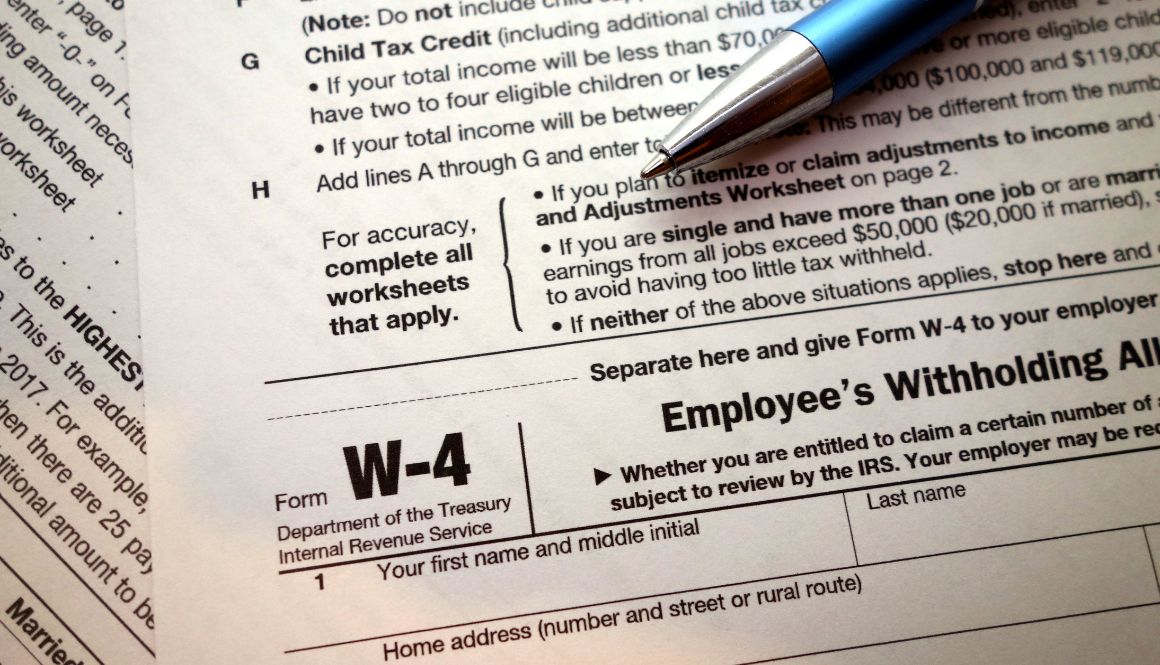
What is a W-4 Form?
Table of Contents
What is a W-4 Form?
The W-4 form, officially known as the Employee’s Withholding Certificate, is a crucial document for employees in the United States. This form is submitted to your employer to determine the amount of federal income tax that should be withheld from your paycheck.
Understanding how to fill out this form correctly can significantly impact your financial situation, especially during tax season. In this article, we will delve into the intricacies of the W-4 form, its purpose, how to complete it, and when to update it.
What Is the Purpose of the W-4 Form?
The primary function of the W-4 form is to inform your employer about your tax situation. By providing details such as your filing status, the number of dependents, and any additional income, you enable your employer to calculate the appropriate amount of tax to withhold from your earnings. This withholding is essential because it helps ensure that you do not owe a large sum when you file your annual tax return.
Key Functions of the W-4 Form
- Tax Withholding Calculation: The W-4 helps determine how much tax is deducted from your paycheck, which can affect your overall tax liability.
- Adjustments for Life Changes: The form allows you to adjust your withholding based on significant life events, such as marriage, divorce, or the birth of a child.
- Impact on Refunds: Properly filling out the W-4 can help you avoid overpaying taxes throughout the year, leading to a smaller refund or even a balance due when you file your taxes.
Who Needs to Fill Out a W-4 Form?
Any employee who receives a paycheck from an employer is required to fill out a W-4 form. This includes full-time, part-time, and seasonal workers. If you have multiple jobs or if your spouse also works, it’s essential to consider how these factors will influence your tax withholding.
Special Considerations
- Multiple Jobs: If you hold more than one job, you must account for all sources of income when completing your W-4.
- Married Couples: If you are married and both partners work, you may need to coordinate your W-4 forms to help ensure accurate withholding.
- Dependents: Claiming dependents can significantly affect your tax situation, so it’s important to accurately report this information.
How to Complete the W-4 Form
Filling out the W-4 form may seem daunting, but it can be broken down into manageable steps. Here’s a detailed guide on how to complete each section of the form.
Step 1: Personal Information
Begin by entering your personal details, including your name, address, Social Security number, and tax filing status. Your filing status can be single, married filing jointly, married filing separately, or head of household.
Step 2: Employment Information
In this section, you will need to provide information about any additional jobs you or your spouse may have. You have several options for determining your withholding:
- IRS Withholding Estimator: This online tool can help you calculate the most accurate withholding based on your combined incomes.
- Multiple Jobs Worksheet: If you prefer, you can use the worksheet provided in the W-4 form to determine your withholding.
- Simplified Method: If you and your spouse have only two jobs total and earn similar amounts, you can check a box to simplify the process.
Step 3: Claiming Dependents
If your total income is below a certain threshold, you can claim dependents on your
W-4. For the tax year 2026, this threshold is $200,000 for single filers and $400,000 for married couples filing jointly. Multiply the number of qualifying children and dependents by the specified amounts on the form.
Step 4: Additional Adjustments
This section allows you to fine-tune your withholding further. You can:
- Report Other Income: If you expect to earn income that won’t have withholding, such as interest or dividends, you can report it here.
- Deductions: If you plan to itemize deductions instead of taking the standard deduction, complete the Deductions Worksheet and enter the result.
- Extra Withholding: If you want additional tax withheld from each paycheck, specify that amount in this section.
Step 5: Signature and Submission
Finally, sign and date the form before submitting it to your employer’s human resources department. This step is crucial, as an unsigned form is considered invalid.
When Should You Update Your W-4 Form?
It’s essential to review and update your W-4 form whenever your financial or personal circumstances change. Here are some common situations that may warrant an update:
Major Life Events
- Marriage or Divorce: Changes in marital status can significantly affect your tax situation and withholding needs.
- Birth or Adoption of a Child: Adding a dependent can allow you to claim additional allowances, reducing your withholding.
- Change in Employment: If you start a new job or take on additional work, you should reassess your withholding.
Financial Changes
- Significant Income Changes: If you receive a raise, bonus, or lose a job, it’s wise to adjust your W-4 accordingly.
- Tax Law Changes: Stay informed about any changes in tax laws that may affect your withholding requirements.
The Impact of Withholding on Your Tax Return
Understanding how your W-4 affects your tax return is crucial for effective financial planning. The amount withheld from your paycheck directly influences whether you will owe money or receive a refund when you file your taxes.
Over-Withholding vs. Under-Withholding
- Over-Withholding: If too much tax is withheld, you may receive a large refund, but this means you’ve essentially given the government an interest-free loan throughout the year.
- Under-Withholding: Conversely, if not enough tax is withheld, you may face a tax bill when you file your return, potentially leading to penalties.
Finding the Right Balance
To avoid these scenarios, aim for a balance where your withholding closely matches your tax liability. This can be achieved by regularly reviewing your W-4 and making adjustments as necessary.
Common Mistakes to Avoid
When filling out the W-4 form, it’s easy to make mistakes that can lead to incorrect withholding. Here are some common pitfalls to watch out for:
Inaccurate Personal Information
Seek to ensure that all personal details, such as your name and Social Security number, are correct. Errors in this section can lead to complications with your tax return.
Miscalculating Allowances
Be cautious when calculating the number of allowances you claim. Overestimating can result in under-withholding, while underestimating can lead to over-withholding.
Failing to Update
Many individuals forget to update their W-4 after significant life changes. Regularly reviewing your form can help you avoid unnecessary tax issues.
Resources for Further Assistance
If you have questions or need assistance with your W-4 form, several resources are available:
- IRS Website: The IRS provides comprehensive information and tools, including the Withholding Estimator.
- Tax Professionals: Consulting with a tax advisor can help you navigate complex situations and help ensure accurate withholding.
- Employer Resources: Many employers offer resources or workshops to help employees understand their W-4 forms.
Conclusion
The W-4 form is a vital tool for managing your tax withholding and ensuring that you meet your tax obligations without overpaying. By understanding how to fill out the form correctly and knowing when to update it, you can take control of your financial situation and avoid surprises during tax season.
Regularly reviewing your W-4 in light of life changes and financial circumstances will help you maintain the right balance in your tax withholding, ultimately leading to a smoother tax filing experience.